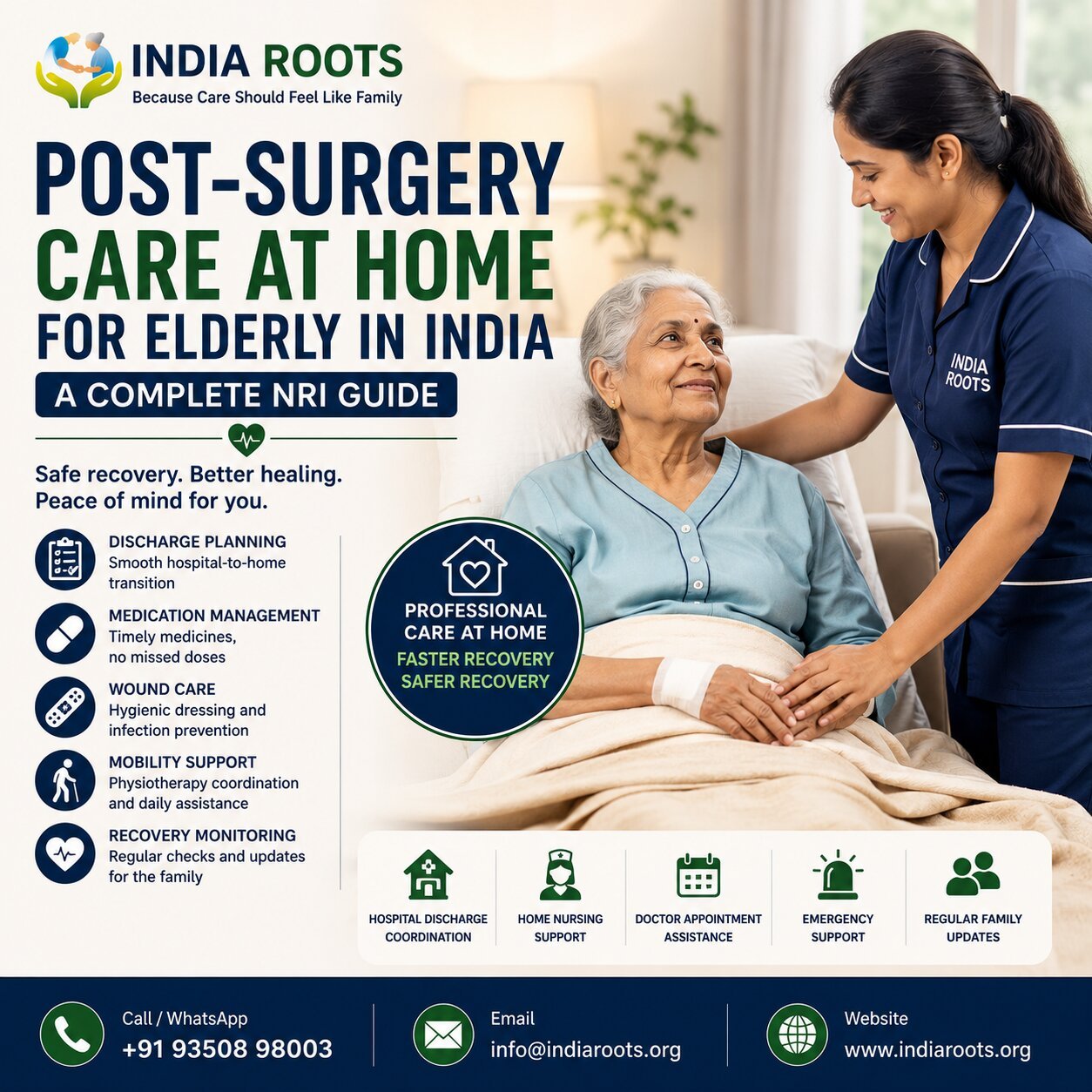
Parents recover much better at home than in a hospital ward — but only if the right support is in place. For NRI families, the hardest part usually isn’t the surgery itself. It’s the weeks that follow.
Who will help them walk to the bathroom safely? Who gives the medicines on time? Who changes the dressing and notices if a wound is turning red? And if something goes wrong at 2 AM in India while you’re asleep in another time zone — who responds?
This guide walks through everything elderly patients and their families need for a safe recovery at home after surgery, and where structured support from a team like IndiaRoots fits in.
Quick Answer: What Is Post-Surgery Care at Home?
Post-surgery care at home helps elderly patients recover safely after hospital discharge. It includes medication management, wound care, mobility assistance, physiotherapy coordination, nutrition support, follow-up appointments, emergency monitoring, and regular family updates — all aimed at reducing complications and supporting a full recovery.
Why Recovery at Home Needs Planning, Not Just Rest
Getting discharged from the hospital doesn’t mean recovery is complete — it means the next, often harder, phase is beginning. At home, elderly parents still need:
- Close observation for early warning signs
- Supervised medication schedules
- Proper nutrition to support healing
- Safe mobility assistance
- Emotional support during a vulnerable period
Without a plan for these, small issues can turn into hospital readmissions.
Why Elderly Recovery Takes Longer
Recovery in seniors is rarely as fast or predictable as in younger patients, because of factors that compound after surgery:
- Reduced immunity and slower wound healing
- Pre-existing conditions like diabetes, heart disease, or high blood pressure
- Weaker muscles, increasing fall risk
- Reduced appetite and poor sleep during recovery
- Age-related memory changes that affect medicine adherence
This is exactly why post-operative care for elderly parents needs more structure than a typical recovery plan.
Common Surgeries Among Elderly Parents
Some of the most frequent procedures requiring structured post-surgery home care include:
- Hip replacement
- Knee replacement
- Fracture surgery
- Cataract surgery
- Gallbladder surgery
- Cardiac surgery
- Spine surgery
- Prostate surgery
- Cancer surgery
- Abdominal surgery
Each comes with its own recovery timeline, but the underlying needs — medication discipline, wound monitoring, and mobility support — remain broadly similar.
Hospital Discharge Checklist
Before your parent leaves the hospital, make sure the family (or your local support team) has collected:
| Item | Why It Matters |
|---|---|
| Discharge Summary | Provides a complete record of the treatment received, procedures performed, discharge instructions, and recommendations for ongoing recovery. |
| Medicine List | Ensures every medication is taken in the correct dosage and at the prescribed times to support healing and prevent complications. |
| Follow-up Appointment | Allows the doctor to monitor recovery, assess healing progress, and make any necessary adjustments to treatment. |
| Emergency Contacts | Enables immediate communication with family members, healthcare providers, or emergency services when urgent assistance is needed. |
| Medical Reports | Gives future doctors access to diagnostic reports, test results, and treatment history for informed medical decisions. |
| Insurance Documents | Supports cashless treatment, reimbursement claims, and verification of health insurance coverage when required. |
| Physiotherapy Plan | Guides mobility exercises and rehabilitation to improve strength, flexibility, and a safe return to daily activities. |
| Diet Instructions | Promotes faster healing by ensuring proper nutrition, hydration, and any special dietary requirements recommended by the doctor. |
Preparing the Home Before Discharge
A few hours of preparation before your parent comes home can prevent falls and complications later:
- Bedroom: easy-access bed, night lamp, walking space cleared
- Bathroom: grab bars, anti-slip mats, raised toilet seat
- Kitchen: essentials within easy reach, no bending or reaching required
- Mobility aids: walker or wheelchair set up and ready
- Medication station: a clearly labeled, visible spot for all medicines
- Emergency numbers: written down and visible, not just saved in a phone
Medication Management
Missed doses are one of the most common — and most preventable — causes of complications after surgery. Pay close attention to:
- Pain medicines (timing matters for comfort and mobility)
- Antibiotics (missed doses can lead to resistant infections)
- Blood thinners (dosage errors carry serious risk)
- Insulin and BP medicines (any missed dose affects stability)
- Setting reminders for every dose
- Tracking prescription refills before they run out
- Watching for drug interactions, especially with existing medication
Wound Care
Proper wound care prevents the single most common reason for post-surgery readmission: infection. Key points include:
- Keeping the dressing clean and dry
- Changing dressings exactly as instructed
- Watching for infection signs — swelling, redness, unusual discharge, or odor
- Knowing exactly when to call the doctor rather than waiting
- Using sterile technique for every dressing change
Mobility and Fall Prevention
Elderly patients recovering from surgery face a significantly higher fall risk — and a fall during recovery can undo weeks of progress. Focus on:
- A structured, gradually increasing walking schedule
- Physiotherapy sessions as prescribed
- Using a walker or support rails consistently
- Avoiding stairs until cleared by a doctor
- Safe, non-slip footwear at all times
- Repositioning regularly to prevent bed sores
- Encouraging daily movement, even if minimal
Nutrition After Surgery
Healing places extra demand on the body. A recovery-focused diet should include:
- Protein for tissue repair
- Adequate water intake
- Fruits, vegetables, and fiber
- Calcium and Vitamin D for bone-related surgeries
- Doctor-prescribed dietary restrictions
- Special attention to diabetic considerations, where applicable
Warning Signs That Need Immediate Medical Attention
| Warning Symptom | Recommended Action |
|---|---|
| High Fever | Contact the treating doctor immediately, as a fever may indicate an infection or post-operative complication. |
| Excessive Bleeding | Seek emergency medical care without delay to prevent serious complications. |
| Chest Pain | Arrange an immediate emergency evaluation, as chest pain can be a sign of a life-threatening condition. |
| Difficulty Breathing | Seek urgent medical attention immediately, especially if breathing becomes laboured or worsens. |
| Wound Redness | Consult your healthcare provider promptly to rule out infection or delayed wound healing. |
| Severe Swelling | Schedule an immediate medical review to assess for possible complications such as infection or blood clots. |
| Persistent Vomiting | Contact the doctor for assessment, as dehydration or medication-related issues may require treatment. |
| Loss of Consciousness | Call emergency medical services immediately and do not attempt to move the patient unless necessary for safety. |
If any of these appear, don’t wait for the next scheduled check-in — act immediately.
Follow-Up Appointments
Follow-ups aren’t optional extras — they’re how doctors catch complications early. Make sure someone can handle:
- Scheduling and remembering appointment dates
- Arranging transport for parents with limited mobility
- Carrying complete medical records to every visit
- Preparing questions in advance for the doctor
- Reviewing medicines and physiotherapy progress at each visit
Emotional Recovery Matters Too
Physical healing is only part of the picture. Many elderly patients experience:
- Fear about their independence or mortality
- Loneliness during a slow recovery
- Mild depression or reduced confidence
- A strong need for companionship and encouragement
Regular family video calls and simple, consistent encouragement go a long way — recovery is as much emotional as physical.
Challenges Faced by NRI Families
Coordinating post-surgery care from abroad brings its own set of difficulties:
- Time zone gaps that delay communication with doctors
- Difficulty getting clear updates from hospital staff
- Finding reliable, vetted caregivers on short notice
- Monitoring medicine schedules remotely
- Uncertainty about who responds in an emergency
- Getting consistent daily updates
- Coordinating multiple doctor appointments from a distance
This is precisely the gap covered in our guide on managing emergencies when your parent has fallen and you’re abroad — the same coordination challenges apply just as strongly after planned surgery.
How IndiaRoots Helps After Surgery
IndiaRoots coordinates the entire post-surgery journey so families abroad aren’t managing it alone. Our support includes:
- Hospital discharge coordination
- Medicine reminders and prescription refills
- Home nursing coordination
- Doctor appointment assistance and hospital accompaniment
- Physiotherapy coordination
- Regular wellness visits
- Emergency response
- Structured family reports
- Home safety checks
- Companionship during recovery
Managing Alone vs. With IndiaRoots
| Task | Managing Alone | With IndiaRoots |
|---|---|---|
| Hospital Discharge | Family members must coordinate the discharge process remotely, often with limited visibility and communication. | Safe hospital-to-home transition is arranged, ensuring your parent reaches home comfortably and on time. |
| Medication Management | Medication schedules can be forgotten, leading to missed doses and delayed recovery. | Medication schedules are monitored and coordinated to help ensure every dose is taken on time. |
| Doctor Appointments | Scheduling appointments and arranging transport can be difficult from overseas. | Appointments are scheduled, confirmed, and your parent is accompanied when needed. |
| Wound Care | Families often depend on unverified local assistance for dressing changes and wound monitoring. | Professional home nursing coordination helps ensure timely dressing changes and recovery support. |
| Physiotherapy | Finding reliable physiotherapists and managing appointments can be challenging. | Physiotherapy sessions are coordinated locally to support safe and effective recovery. |
| Emergency Response | Emergency assistance often depends on neighbours or nearby relatives being available. | Immediate local support is activated, with rapid family notification during emergencies. |
| Family Updates | Families rely on occasional phone calls that may not reflect the parent’s actual condition. | Detailed reports and regular updates are shared after each visit, keeping families informed. |
| Recovery Monitoring | Limited visibility into day-to-day recovery makes it difficult to identify problems early. | Regular wellness visits and progress monitoring help identify concerns before they become serious. |
Case Example: Helping an NRI Family in Canada
A father in Chandigarh underwent knee replacement surgery while his son managed everything remotely from Canada. IndiaRoots handled the hospital pickup, prepared the home in advance, set up the medicine schedule, coordinated physiotherapy sessions, managed doctor follow-ups, and sent daily recovery reports to the family — allowing the father to recover safely at home while his son stayed informed every step of the way, without needing to fly back.
Frequently Asked Questions
How long does recovery take after surgery?
It varies by procedure — cataract recovery may take days, while hip or knee replacement recovery typically takes several weeks to months of guided rehabilitation.
Can elderly patients recover without professional nursing support?
For minor procedures with strong family support nearby, yes. For major surgeries, complex medication schedules, or when family is abroad, professional coordination significantly reduces risk.
When should physiotherapy start after surgery?
This depends entirely on the procedure and the surgeon’s instructions — some physiotherapy begins within days of surgery, while other cases require a longer initial rest period.
Who should change the wound dressing?
Ideally a trained nurse or caregiver, following the exact instructions given at discharge, to reduce infection risk.
What foods help recovery after surgery?
Protein-rich foods, plenty of water, fiber, and doctor-approved nutrients like calcium and Vitamin D support faster healing.
Can parents stay alone during recovery?
This depends on the surgery and mobility level — but the first 1–2 weeks after major surgery are generally not recommended to be spent alone.
How often should a doctor review progress?
Follow-up frequency is set by the surgeon, but any new or worsening symptoms should prompt an immediate, unscheduled review.
Does IndiaRoots provide post-surgery support?
Yes — from hospital discharge through full recovery, including nursing coordination, medicine management, and family reporting.
Conclusion
Good surgery is only the beginning. Recovery is what determines the real outcome — and for elderly parents, that recovery depends heavily on consistent supervision, timely medication, proper nutrition, and someone who notices when something isn’t right. Professional coordination reduces complications and gives families abroad genuine peace of mind.
Need Help After Your Parent’s Hospital Discharge?
Whether your parent is recovering from joint replacement, fracture surgery, heart surgery, cataract surgery, or another procedure, IndiaRoots helps coordinate safe recovery at home with medication management, hospital follow-ups, home nursing coordination, and regular family updates.
📞 Call/WhatsApp: +91 93508 98003
📧 Email: info@indiaroots.org