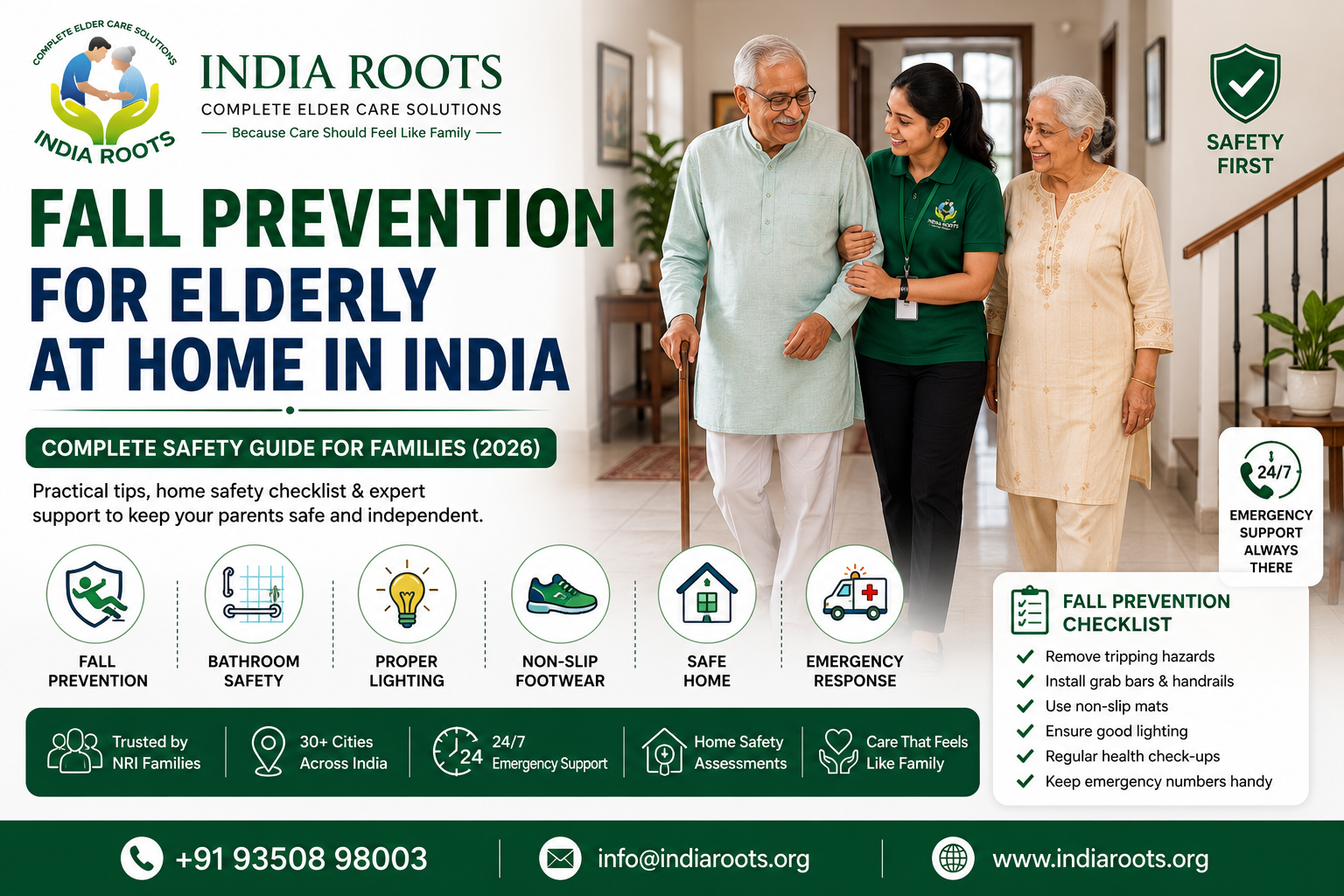
Falls are one of the leading causes of injury among senior citizens, and for many Indian families, a single fall changes everything overnight. What starts as a moment of losing balance in the bathroom or tripping over a loose rug can turn into a hospital stay, a long recovery, and months of anxiety.
This risk becomes even more pressing when elderly parents live alone, without someone nearby to notice early warning signs or step in immediately after an incident. For NRI families watching from thousands of kilometers away, the fear isn’t hypothetical — it’s a call at 3 a.m. that many dread.
The good news is that most falls are preventable. Simple home modifications, consistent daily habits, and regular check-ins can dramatically reduce the risk. This guide walks through why falls happen, what puts seniors at risk, how to fall-proof every room in the house, and what to do if a fall does occur — along with how IndiaRoots’ home elder care services support families managing this from abroad.
Why Falls Are a Serious Concern for Elderly Parents in India
As people age, several physical changes quietly increase fall risk, often without anyone noticing until it’s too late:
- Reduced balance from changes in the inner ear and nervous system
- Muscle weakness, especially in the legs, making recovery from a stumble harder
- Poor eyesight, which makes it difficult to spot uneven surfaces or steps
- Medication side effects like dizziness, drowsiness, or low blood pressure
- Chronic illnesses that affect strength, coordination, or bone density
- Slower reaction time, meaning less time to catch oneself before a fall becomes serious
Falls among older adults are widely recognized by health authorities as a major cause of injury-related hospitalization in this age group, and the risk climbs significantly after age 65. What makes this especially concerning in the Indian context is that many seniors live independently while their adult children are settled abroad — meaning hazards can go unnoticed for months.
Common Causes of Falls Inside the Home
Slippery Bathroom Floors
Wet tiles, soap residue, and the absence of grab bars make Indian bathrooms one of the most common fall sites. Traditional bathroom flooring, often smooth marble or tile, becomes especially dangerous when wet.
Poor Lighting
Dark hallways, dimly lit staircases, and bedrooms at night are frequent culprits. Many seniors avoid turning on lights to save electricity or simply don’t reach the switch in time.
Loose Rugs and Carpets
Sliding mats, curled-up edges, and uneven flooring transitions between rooms are easy to overlook until someone catches a foot on them.
Cluttered Walkways
Electrical wires trailing across the floor, furniture placed in walking paths, boxes, and stray shoes are all silent hazards that build up over time in a home without regular oversight.
Stairs Without Support
Missing handrails, uneven or chipped steps, and poor staircase lighting combine to make stairs one of the riskiest areas of the home.
Improper Footwear
Loose slippers, smooth-soled chappals, and even short heels reduce grip and stability — a small detail that’s often overlooked.
Who Is Most at Risk of Falling?
Certain groups face significantly elevated fall risk and deserve closer attention:
- Adults over 65, with risk increasing further past 75
- Those with arthritis or joint pain
- People with Parkinson’s disease
- Stroke survivors
- Individuals with dementia
- Those with osteoporosis or brittle bones
- People managing diabetes (which can affect sensation in the feet)
- Anyone with poor or uncorrected vision
- Anyone who has fallen before — a previous fall is one of the strongest predictors of a future one
If your parent has any of these risk factors, it’s worth reading our related guide on dementia symptoms in elderly parents, since cognitive decline often compounds fall risk in ways families don’t immediately connect.
Room-by-Room Fall Prevention Checklist
Bedroom
- A night lamp within easy reach of the bed
- Phone kept close by at all times, especially overnight
- Bed at a stable, appropriate height — not too high or too low
- A clear, unobstructed path to the bathroom
Bathroom
- Grab bars near the toilet and inside the shower
- Anti-slip mats on wet flooring
- A raised toilet seat if standing up is difficult
- A shower chair for those who tire easily or feel unsteady
Kitchen
- Frequently used items stored within easy reach — no reaching or climbing
- Floors kept dry, especially near the sink
- A stable stool used only when necessary, avoiding any climbing on chairs or counters
Living Room
- Loose rugs removed or secured with non-slip backing
- Cables and wires tucked away from walking paths
- Furniture that’s stable and doesn’t wobble when leaned on
- Bright, adequate lighting throughout
Staircase
- Handrails installed on both sides, not just one
- Non-slip strips on each step
- Bright lighting at both the top and bottom
- No storage of boxes, shoes, or other items on the steps
For a downloadable, comprehensive version of this checklist covering the entire home, see our home safety checklist for elderly parents living alone in India.
Daily Habits That Help Prevent Falls
Beyond physical home changes, consistent daily habits meaningfully lower fall risk over time:
- Regular walking to maintain strength and mobility
- Simple balance exercises, ideally guided by a physiotherapist
- Light strength training for the legs and core
- Staying well hydrated, since dehydration contributes to dizziness
- Wearing proper, well-fitted, non-slip footwear at all times — even indoors
- Getting regular vision checkups and updating prescriptions
- Periodic medication reviews with a doctor to check for side effects like drowsiness
- Maintaining a healthy, balanced diet to support bone and muscle strength
Medical Conditions That Increase Fall Risk
Several conditions directly affect balance and stability, and understanding the connection helps families stay alert:
- Arthritis limits joint flexibility and can cause sudden pain that throws off balance
- Parkinson’s disease affects gait, coordination, and reaction time
- Diabetes can cause numbness in the feet, reducing the ability to sense uneven ground
- High blood pressure and its medications can cause dizziness upon standing
- Stroke often leaves lasting effects on one side of the body’s strength and coordination
- Dementia impairs judgment about hazards and awareness of surroundings
- Osteoporosis doesn’t cause falls directly but makes any fall far more likely to result in a serious fracture
Warning Signs That Your Parent Is at High Risk of Falling
Watch for these behavioral and physical cues, which often appear well before a serious fall happens:
- Holding onto furniture or walls while walking
- Difficulty standing up from a chair or bed without support
- Frequent dizziness or lightheadedness
- Noticeably slower walking speed
- A visible fear of walking or moving around the house
- Recent minor falls or near-falls, even if no injury occurred
- Difficulty climbing or descending stairs
If you’re noticing several of these signs, it’s worth reviewing our broader guide on signs your elderly parent needs care for a fuller picture of when additional support is needed.
What To Do Immediately After an Elderly Person Falls
- Stay calm. Panic makes it harder to think clearly and can frighten the person who’s fallen.
- Check for injuries before doing anything else — look for pain, swelling, or inability to move a limb.
- Do not lift them immediately if there’s any suspicion of a fracture or severe pain, especially around the hip, back, or head.
- Call emergency services if the fall seems serious, if they’re unconscious, or if they can’t get up on their own.
- Contact family right away, even if the fall seems minor.
- Arrange a medical evaluation — some injuries, especially head injuries, aren’t obvious immediately.
- Monitor for delayed symptoms over the following days, such as increasing pain, confusion, or swelling.
If your parent has already had a fall and you’re managing the situation from abroad, our article on what to do when a parent has had a fall in India while you’re overseas walks through the exact steps to take.
Emergency Preparedness for Seniors Living Alone
Being prepared before an emergency happens makes all the difference in outcomes:
- A written, updated emergency contact list kept visible near the phone
- A mobile phone that’s always within reach, ideally with emergency contacts on speed dial
- A medical ID or card listing conditions, allergies, and medications
- Regular check-ins, whether by family, neighbors, or a professional caregiving service
- Local caregiver support who can respond quickly in person
- Hospital information — preferred hospital, doctor’s contact, and insurance details, all in one place
- A spare set of house keys given to a trusted neighbor or local contact for emergency access
How IndiaRoots Helps Prevent Falls Before They Become Emergencies
This is exactly where having trusted, local support makes the difference between reacting to a crisis and preventing one. IndiaRoots works with NRI families to keep elderly parents safe through:
- Home Safety Assessments — identifying hazards like poor lighting, loose mats, or missing grab bars before they cause an accident
- Regular Wellness Visits — consistent, in-person check-ins that catch warning signs early
- Hospital Accompaniment — someone present for medical evaluations, so parents are never navigating a hospital visit alone
- Medicine Management — ensuring medications are taken correctly and reviewed for side effects like dizziness
- Home Maintenance Coordination — fixing the small structural issues, like uneven steps or faulty lighting, that quietly increase risk
- Emergency Response — rapid, local action if something does go wrong
- Family Updates — so you’re never left wondering how your parent is doing
Real-Life Scenario
Mrs. Sharma, 78, lives alone in Gurugram while her son works in Canada. During a routine IndiaRoots wellness visit, the team identified two hazards: loose bathroom mats and poor hallway lighting. Grab bars were installed, the old mats were replaced with proper non-slip versions, and brighter lighting was added throughout the hallway. Regular wellness visits have continued since, keeping a close eye on her safety and giving her son real peace of mind from thousands of miles away.
Professional Elder Care vs Managing Alone
Fall Prevention Checklist for NRI Families
- ✓ Bathroom safety checked
- ✓ Grab bars installed
- ✓ Medicines reviewed
- ✓ Vision test completed
- ✓ Emergency contacts updated
- ✓ Night lights installed
- ✓ Non-slip footwear available
- ✓ Home inspected for hazards
- ✓ Regular wellness visits arranged
- ✓ Emergency response plan in place
Frequently Asked Questions
What causes most falls among elderly people?
Most falls result from a combination of physical factors like poor balance and weak muscles, and environmental hazards like slippery floors, poor lighting, and loose rugs.
How can I make my parents’ home safer?
Start with a room-by-room safety review — remove loose rugs, install grab bars in the bathroom, improve lighting, and clear walkways of clutter and cables.
Are bathroom grab bars necessary?
Yes. Bathrooms are one of the most common fall locations due to wet, slippery surfaces, and grab bars provide crucial support near the toilet and shower.
What shoes are safest for senior citizens?
Well-fitted shoes with non-slip soles and good back support are safest — loose slippers and smooth-soled footwear should be avoided, even indoors.
Should elderly parents living alone have regular safety checks?
Yes, regular home safety checks help catch hazards — like a newly loose rug or a dead hallway bulb — before they cause an accident.
When should I seek medical care after a fall?
Seek medical care immediately if there’s severe pain, visible injury, inability to stand, confusion, or if the fall involved hitting the head.
Can falls be prevented completely?
Not entirely, but most falls can be significantly reduced through home modifications, daily exercise, medication reviews, and consistent monitoring.
How often should a home safety inspection be done?
An inspection every few months, or after any change in a parent’s health or mobility, is a reasonable standard.
Does IndiaRoots provide emergency support after a fall?
Yes, IndiaRoots offers emergency response coordination and can be reached immediately by family for urgent situations.
Can IndiaRoots coordinate hospital visits?
Yes, IndiaRoots provides hospital accompaniment so parents have someone present for medical evaluations and don’t have to navigate care alone.
Conclusion
While not every fall can be prevented, many can be avoided through thoughtful home modifications, healthy daily habits, regular monitoring, and timely assistance when something feels off. For NRI families, having trusted, local support on the ground in India can make a meaningful difference in protecting elderly parents and easing the constant worry that comes with distance.
Worried about your parents living alone in India?
IndiaRoots helps NRI families reduce fall risks through home safety assessments, regular wellness visits, medication support, emergency response coordination, and compassionate local assistance.
📞 Call/WhatsApp: +91 93508 98003
📧 Email: info@indiaroots.org
🌐 Website: indiaroots.org