The Season That Looks Beautiful from Abroad
For many Indians living overseas, the monsoon carries a kind of romantic nostalgia. The smell of rain on dry earth. Chai and pakoras on a grey afternoon. The sound of heavy rain against a window.
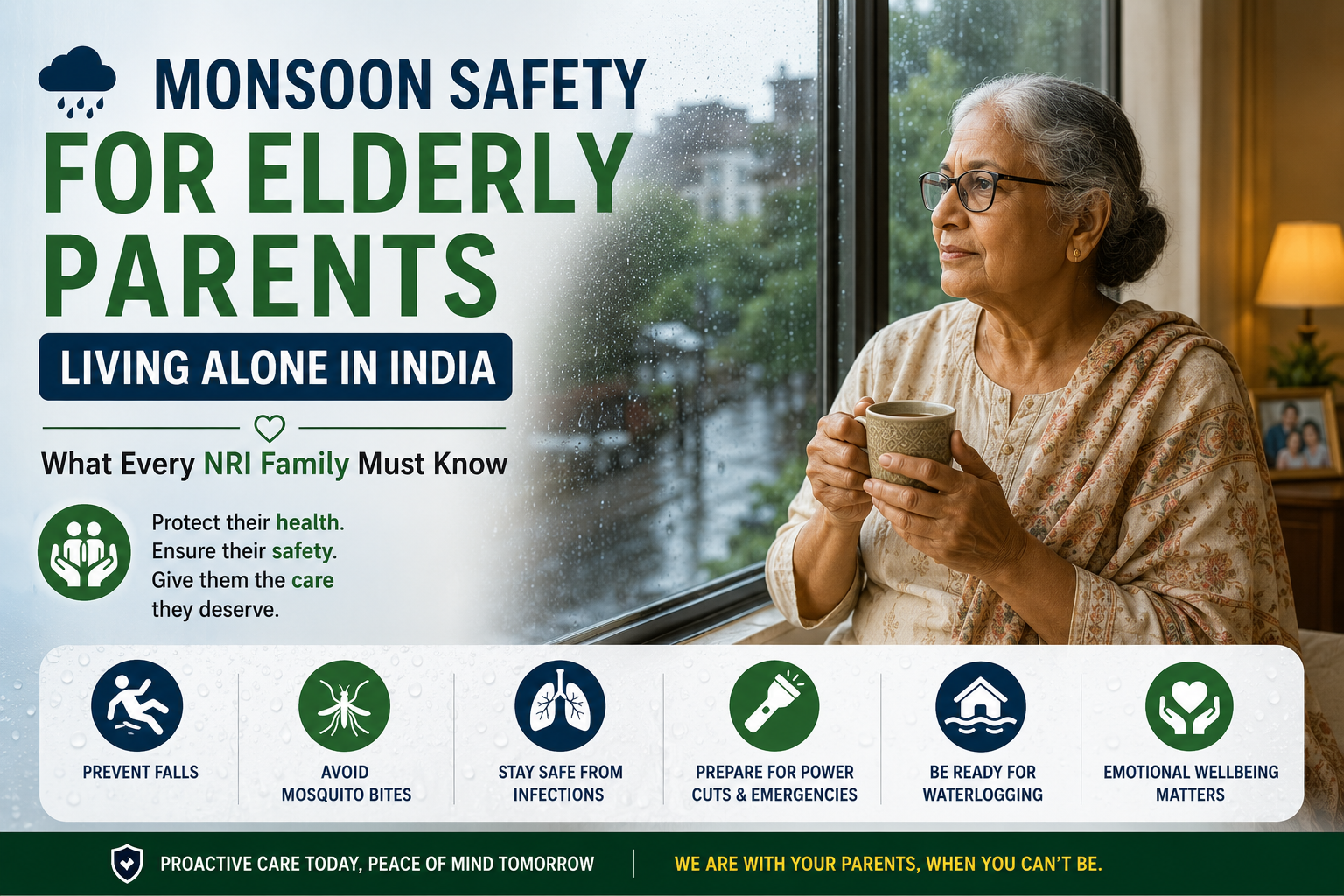
But when your elderly parents are living alone in India — in a city like Delhi, Bangalore, Chandigarh, Ludhiana, or Gurugram — the monsoon is not romantic. It is one of the most physically dangerous and emotionally isolating seasons an elderly person can face alone.
Wet floors become fall hazards. Flooded roads cut off access to hospitals. Power cuts leave elderly adults alone in the dark. Mosquito-borne illnesses surge. Dampness worsens arthritis and joint pain. Waterlogged streets make doctor visits difficult or impossible. And the grey, overcast days — week after week — quietly deepen the loneliness that many elderly parents already carry.
If your parents are living alone in India this monsoon season, this guide is written for you.
It covers every risk the season brings, every practical step you can take from abroad, and how to ensure that your parents are genuinely safe, healthy, and supported from June through September — and beyond.
Why Monsoon Is Particularly Dangerous for Elderly Adults
Most people think of monsoon risk in terms of floods and storms. The real risks for elderly adults are quieter, more consistent, and far more personal.
The Body Changes With Age
As the human body ages, its ability to regulate temperature, fight infection, recover from injury, and maintain balance all gradually decline. What a healthy 35-year-old navigates easily — a slippery floor, a sudden drop in temperature, a minor chest infection — can become a serious medical event for someone in their 70s or 80s.
The monsoon amplifies every one of these vulnerabilities simultaneously.
Isolation Deepens During the Rainy Season
When roads flood, when auto-rickshaws refuse to travel, when stepping outside means navigating waterlogged streets with uneven surfaces and poor visibility, many elderly adults simply stop going out. They stop visiting friends. They stop attending their regular religious gatherings. They stop the small daily outings that provide structure, purpose, and human contact.
The result is weeks of near-complete social isolation — at a time when the grey weather already affects mood and energy.
Medical Access Becomes Harder
A regular doctor appointment that normally takes 20 minutes can become a two-hour ordeal during heavy monsoon rains. Emergency response times increase when roads are blocked. Ambulances are slower. Local clinics may be inaccessible. For an elderly parent managing a chronic condition or facing an unexpected health event, this reduced access to medical care is a serious risk.
NRI Families Feel the Distance More Acutely
During monsoon season, the gap between an NRI child’s worry and their ability to act becomes especially wide. You cannot check the floor for dampness from Toronto.
You cannot drive your parent to the doctor through flooded Bangalore streets from London. You cannot sit with your mother through a power cut from Sydney.
Understanding what can go wrong — and putting proactive measures in place before the season begins — is the most important thing you can do.
The Seven Major Monsoon Risks for Elderly Parents in India
1. Falls on Wet and Slippery Surfaces
This is the single most common monsoon-related emergency for elderly adults — and among the most dangerous.
Wet floors inside the home, slippery bathroom tiles, damp entrance steps, waterlogged outdoor pathways — all of these become serious fall hazards for elderly adults whose balance, muscle strength, and reaction time are already reduced by age.
A fall that results in a fractured hip for an elderly person is not a minor injury. It frequently requires surgery, extended hospitalisation, and months of recovery. For elderly adults with osteoporosis — which is extremely common and often undiagnosed in elderly Indian women — even a moderate fall can be catastrophic.
The tragedy is that most monsoon falls are entirely preventable.
2. Mosquito-Borne Illnesses
Dengue, malaria, and chikungunya cases surge dramatically across India every monsoon season. Stagnant water — in flower pots, in water storage containers, in clogged drains, even in small puddles inside a compound — becomes a breeding ground for mosquitoes.
For a healthy young adult, dengue is a serious illness. For an elderly person with a compromised immune system, underlying health conditions, or reduced fluid reserves, it can be life-threatening. Platelet drops that a younger body manages can send an elderly adult into rapid decline.
The risk is not just getting bitten. It is the speed at which a mosquito-borne illness can escalate in an elderly body — and the fact that early symptoms like fever, fatigue, and body aches can easily be dismissed as a seasonal cold until the situation becomes critical.
3. Respiratory Infections and Pneumonia
Monsoon brings sudden temperature drops, increased dampness, and a surge in airborne infections. Elderly adults are significantly more susceptible to respiratory tract infections than younger people — and what begins as a cough and mild fever can develop into serious bronchitis or pneumonia within days.
Pneumonia is one of the leading causes of hospitalisation and mortality among elderly adults in India. The monsoon season reliably increases its incidence.
An elderly parent who lives alone, does not want to worry their children, and dismisses their symptoms as “just a seasonal cold” is at real risk of allowing a treatable infection to become a medical emergency.
4. Waterlogging and Flooding Around the Home
Even in cities like Delhi, Bangalore, and Chandigarh — which have reasonable infrastructure — heavy monsoon rains regularly cause waterlogging in residential areas. Streets flood. Compound gates become inaccessible. Ground floor homes take in water.
For an elderly parent living alone, a flooded entrance is not just inconvenient — it means they cannot safely go out, cannot receive visitors easily, and may be cut off from access to groceries, medicine, and medical care for hours or even days at a time.
5. Power Cuts and Their Consequences
Extended power cuts are extremely common across India during monsoon season — caused by storm damage, overloaded grids, and infrastructure failures. For a young adult, a power cut is an inconvenience. For an elderly person living alone, it carries multiple serious risks.
Darkness increases fall risk dramatically. Without a fan or air conditioning, heat and humidity can cause dehydration and heat exhaustion. Refrigerated medications — insulin, certain cardiac drugs — can be compromised if power is lost for extended periods. And the psychological experience of sitting alone in the dark, unable to reach anyone, unable to see clearly, is genuinely frightening.
6. Worsening of Chronic Conditions
Cold and damp weather consistently worsens arthritis, rheumatism, and joint pain in elderly adults — sometimes significantly. What is manageable pain in summer can become severely limiting during monsoon months, reducing mobility and increasing the risk of falls.
Cold temperatures also increase blood pressure and put additional strain on the cardiovascular system — a serious concern for elderly parents with hypertension or cardiac conditions.
Respiratory conditions like asthma and COPD are also aggravated by monsoon air — the combination of humidity, mould spores, and airborne infections creating a difficult season for anyone with a compromised respiratory system.
7. Food and Water Contamination
Waterborne diseases — gastroenteritis, typhoid, hepatitis A — increase significantly during monsoon season as water supply systems are stressed and contamination risk rises. Street food and even restaurant food carries higher contamination risk during this period.
For elderly adults whose digestive systems and immune responses are already weaker, a bout of gastroenteritis that a younger person recovers from in two days can lead to severe dehydration requiring hospitalisation
Room-by-Room Monsoon Safety Checklist for Your Parents’ Home
Before the monsoon season begins, work through this checklist — either during a visit, or by coordinating with a trusted local contact or care service.
Bathroom
- Non-slip mats placed inside and outside the shower or bathing area
- Grab bars or handles installed near the toilet and bathing area if not already in place
- Bath stool available so your parent does not need to stand for extended periods on wet floors
- Night light installed and working so the bathroom is safely navigable in the dark
- Floor checked for any loose tiles or uneven surfaces
Entrance and Common Areas
- Entrance doormat in place and replaced if worn
- Entrance steps checked for cracks, unevenness, or lack of grip
- Any outdoor steps or ramps assessed for slip risk during rain
- Main walking paths inside the home free of loose rugs, cables, or objects that could cause trips
- Adequate indoor lighting in all commonly used areas
Kitchen
- Water storage containers covered tightly — uncovered containers breed mosquitoes
- Refrigerator temperature checked and functioning correctly to prevent food spoilage
- Emergency supply of dry and canned food maintained in case of flooding or inability to go out
- Clean drinking water available — either filtered, boiled, or bottled
Bedroom
- Torch or battery-powered light within easy reach of the bed for power cuts
- Mobile phone charging station next to the bed so the phone is always accessible and charged
- Emergency contact numbers written on paper and placed nearby — not only saved in the phone
- Mosquito net available if the area has a significant mosquito problem
Medications
- Full stock of all regular medications maintained before the season begins — enough for at least four to six weeks
- Medications that require refrigeration assessed for power cut risk
- Backup plan for refrigerated medication storage discussed in advance
Medical Preparation Before Monsoon Season
Review All Ongoing Medications
Coordinate with your parents’ doctor before the season begins to review all current medications. Ensure dosages are current, refills are available in advance, and any new seasonal concerns are addressed proactively.
Vaccinations
The influenza vaccine is strongly recommended for elderly adults every year before the monsoon and winter season. If your parents have not received it recently, this is the time to arrange it. The pneumococcal vaccine — which provides protection against the most serious forms of pneumonia — is also strongly recommended for elderly adults and is a one-time or periodic vaccination.
Baseline Health Check
Arrange a comprehensive health check-up before the monsoon begins — blood pressure, blood sugar, kidney function, and any condition-specific monitoring your parents’ doctor recommends. Having a current baseline makes it significantly easier to identify and respond to any deterioration during the season.
Emergency Medical Plan
Have a clear, written emergency plan in place before the season starts. This means knowing which hospital your parents would go to in different types of emergencies, having the emergency admission contact numbers saved, knowing which local person can be called to accompany them if needed, and ensuring your parents know exactly what to do and who to call if something goes wrong.
Mosquito Prevention: A Practical Approach
Mosquito prevention during monsoon is not about a single measure. It requires a consistent, layered approach.
Start with the home environment. Every container that can hold water — flower pots, water storage vessels, unused buckets, overhead tank lids — should be covered or emptied. Drains around the home should be checked and cleared. Any stagnant water in the compound or outside the home should be flagged with the building management or local authority.
Inside the home, mosquito nets for the bed, mosquito repellent coils or liquid vaporisers, and proper window and door screens all reduce exposure meaningfully. Ensure your parents are using repellent — especially in the evenings when mosquito activity peaks.
Clothing matters too. Long-sleeved, light cotton clothing in the evenings provides a physical barrier that reduces bites.
If your parent develops a fever during monsoon season — even a mild one — it should be taken seriously immediately. Do not wait to see if it passes. Arrange a blood test for dengue and malaria within 24 to 48 hours of fever onset.
Managing Loneliness and Emotional Wellbeing During Monsoon
This aspect of monsoon safety is the one most families overlook completely. It deserves serious attention.
The Psychological Weight of Grey Weeks
Week after week of overcast skies, rain, and reduced outdoor activity has a measurable effect on mood — even for younger adults. For elderly parents already managing the emotional challenges of living alone, the monsoon months can bring a significant deepening of loneliness, low mood, and a sense of purposelessness.
Seasonal affective patterns are real and they affect elderly adults significantly. Reduced sunlight, reduced mobility, reduced social contact — the combination is genuinely hard.
What You Can Do from Abroad
Increase the frequency of your calls during monsoon season. Not because something is wrong, but because connection itself is the intervention.
A daily good morning message. A video call every two days rather than once a week. Sharing a funny video or a photo from your day. These are small gestures that provide significant emotional anchoring.
If your parents have a WhatsApp group with relatives or friends, help them stay active in it. If they have a neighbour who visits, encourage and facilitate that relationship. If they attend a religious community or a senior citizen group, help them maintain those connections even when going out is difficult.
Professional Companionship Support
For elderly parents who spend significant portions of the monsoon season alone, professional companionship visits — where a trained care companion visits regularly for conversation, activity, and engagement — provide consistent, reliable human presence during the months when it is most needed.
What NRI Families Should Do Before Monsoon Begins
One Month Before the Season
- Arrange a comprehensive health check-up for your parents
- Ensure all medication stocks are adequate for four to six weeks
- Confirm flu and pneumococcal vaccination status
- Complete the room-by-room home safety checklist
- Identify and brief a trusted local contact — a neighbour, a relative, or a professional care service — who can respond on the ground if needed
- Confirm that your parents’ mobile phones are working well, charged regularly, and that emergency numbers are saved
Two Weeks Before
- Purchase non-slip mats, grab bars, torches, and mosquito prevention supplies if not already in place
- Ensure a supply of clean water and dry food provisions is available
- Brief your parents clearly on what to do in different emergency scenarios — medical emergency, power cut, flooding, fall
- Confirm your emergency plan — which hospital, which contact, what number to call
During the Season
- Increase call frequency proactively — do not wait for something to go wrong
- Ask specifically about how your parents are feeling, not just whether they are fine
- Check in on medication supply, food supply, and home conditions regularly
- Act immediately if your parent mentions fever, breathlessness, severe joint pain, or any symptom that could indicate a serious illness
- Ensure someone on the ground is checking in physically — not just over the phone
How Professional Elder Care Services Help During Monsoon
For NRI families, the monsoon season highlights exactly where the distance gap creates the most risk — and exactly where professional elder care fills it.
A professional care team provides the on-ground physical presence that no amount of phone calls can replace. During monsoon season specifically, this means regular in-person wellness checks so that any health deterioration is caught early. It means someone who can accompany your parent to a doctor even when roads are difficult. It means an emergency response team that can reach your parent quickly when something goes wrong.
It means medication management — so that a missed dose during a difficult week does not turn into a health crisis. It means companionship visits during the weeks of grey isolation. It means a care coordinator who monitors your parents’ wellbeing daily and updates you consistently — so that you are genuinely informed, not just hoping for the best.
The monsoon season is not the time to discover that your existing arrangements are not sufficient. It is the time to have professional support already in place.
A Note for Parents Who Say “I’m Fine”
Most elderly parents will tell their children they are fine.
They say it because they mean it — at least partially. They say it because they do not want to worry anyone. They say it because asking for help feels like admitting a vulnerability they are not ready to accept. They say it because they are proud, self-sufficient people who have managed their lives for decades and do not want to become a burden.
This is deeply human and deeply understandable. It is also why reactive care — waiting until something goes wrong — is not enough.
Proactive support, arranged with love and framed around dignity rather than dependency, is what actually protects elderly parents during a season like monsoon. Not waiting for a fall. Not waiting for a fever to turn serious. Not waiting for the phone to ring at 2 AM.
Acting now, before the season intensifies, is the most loving thing you can do.
Frequently Asked Questions
When does monsoon season typically begin in North India and South India?
Monsoon generally arrives in South India — including Bangalore, Chennai, and Hyderabad — in late May or early June. It reaches North India — Delhi, Punjab, Haryana, Chandigarh — by late June or early July. The season typically extends through September.
What is the most common monsoon-related emergency for elderly adults in India?
Falls on wet and slippery surfaces are the most frequent monsoon-related emergency for elderly adults. Dengue and other mosquito-borne illnesses are the second most common serious risk.
How do I know if my parent has dengue?
Key symptoms of dengue include sudden high fever, severe headache, pain behind the eyes, joint and muscle pain, skin rash, and fatigue. If your parent develops a fever during monsoon season, arrange a blood test within 24 to 48 hours. Do not wait to see if it resolves on its own.
My parents refuse to let me install grab bars or non-slip mats. What should I do?
Frame the conversation around their independence rather than their vulnerability. Grab bars and non-slip mats are not signs that something is wrong — they are tools that ensure they can continue living independently and safely. Many families find it helps to install these during a visit so it does not feel like a remote imposition.
What should I do if my parent has a fall during monsoon and I am abroad?
Call your emergency contact on the ground immediately — whether a neighbour, a relative, or a professional care service. If your parent requires emergency medical attention, they should call 112 (India’s national emergency number) or the nearest hospital emergency line. Having a professional care service already in place means you have a trained team who can respond immediately without you needing to coordinate everything from abroad.
Is it safe for elderly parents to eat street food during monsoon?
It is advisable for elderly parents to avoid street food during monsoon season due to significantly elevated contamination risk. Home-cooked food using clean, boiled or filtered water is the safest option during this period.
Conclusion: This Monsoon, Act Before Something Goes Wrong
The monsoon season will arrive whether you are prepared for it or not.
The difference between a season your parents navigate safely — and a season that ends with a preventable hospitalisation, a serious illness, or weeks of frightening isolation — is almost entirely determined by the preparation and support you put in place before it begins.
Your parents are not going to ask you to do this. They will tell you they are managing. They will tell you not to worry.
But you can still act. You can still make sure the floors are safe. The medications are stocked. The emergency plan is clear. The companionship is consistent. The professional support is in place.
You can make sure that when the monsoon comes, someone who knows your parents and cares about them is already there — on the ground, present, and ready.
That is what peace of mind actually looks like. Not hoping everything will be fine. Knowing that the right people are in place to make sure it is.
Book a Free Consultation with IndiaRoots Today
📞 +91 93508 98003 📧 info@indiaroots.org
Supporting elderly parents and NRI families across Delhi, Bangalore, Chandigarh, Punjab, Haryana, and all major cities across India — through every season.