As parents grow older, the home they’ve lived in for decades — the one that once felt completely safe — can quietly become a place of hidden risks.
A loose rug, a dim staircase, a slippery bathroom floor: these small, everyday details rarely register as dangerous until an accident happens.
For seniors, the consequences of a single fall or overlooked hazard can be far more serious than they would be for a younger person, often leading to fractures, hospitalisation, or a long, difficult recovery.
This challenge becomes even more complicated for NRI families. When you’re managing your parents’ wellbeing from another country, you can’t personally check whether the bathroom has a grab bar, whether the smoke detector still works, or whether the medicine cabinet is properly organised.
Time zones, distance, and the natural reluctance of parents to “worry the children” all mean that risks often go unnoticed until something goes wrong.
The good news is that most home accidents among seniors are preventable. A few thoughtful modifications — better lighting, non-slip mats, secured wiring, clear walkways — can dramatically reduce the risk of falls, burns, and emergencies.
This guide walks you through a complete, room-by-room home safety checklist designed specifically for elderly parents living in India, along with practical guidance for NRI families who want to protect their parents’ independence without being physically present every day.
Quick Answer: What Is a Home Safety Checklist for Elderly Parents?
A home safety checklist for elderly parents is a systematic review of a home’s layout, fixtures, and daily hazards, designed to identify and reduce risks such as falls, burns, medication errors, fire hazards, and emergencies. It typically covers every room in the house — entrance, living room, bedroom, bathroom, kitchen, and staircase — along with emergency preparedness measures like accessible medical records, emergency contacts, and safety devices. The goal is simple: make the home as low-risk as possible while preserving the parent’s independence and comfort.
Why Home Safety Matters for Seniors Living Alone
Increased Fall Risk
Falls are the leading cause of injury among people over 60. Reduced muscle strength, slower reflexes, and balance issues mean that even a minor trip can result in a fracture or head injury.
Reduced Vision and Hearing
Age-related vision and hearing changes make it harder to notice hazards — a step that’s slightly uneven, a doorbell ringing from another room, or a kettle whistling on the stove.
Mobility Challenges
Arthritis, joint pain, and general stiffness can make stairs, low seating, and even getting in and out of the bathtub genuinely risky tasks.
Memory Problems
Forgetting whether the stove was switched off, misplacing medication, or losing track of time can all lead to accidents that a fully alert younger adult would avoid.
Medical Emergencies
Heart conditions, blood pressure fluctuations, and diabetes-related complications can strike suddenly. Without someone present, a medical emergency can go unnoticed for hours.
Fire and Electrical Hazards
Old wiring, overloaded sockets, and unattended gas stoves are common in many Indian homes, particularly older independent houses — and they pose a much greater risk to seniors who may not react quickly.
Common Home Safety Risks in Indian Homes
Indian homes have some safety challenges that are slightly different from those in Western countries, largely due to building style, climate, and infrastructure age.
Slippery bathrooms — Indian bathrooms are often wet-area style with tiled floors that become extremely slippery, especially without anti-slip mats.
Loose rugs and carpets — A common tripping hazard, particularly on marble or polished stone flooring.
Poor lighting — Many older homes have dim hallway or staircase lighting, increasing fall risk at night.
Cluttered walkways — Furniture, boxes, or wires left in walking paths.
Staircase hazards — Missing handrails, uneven steps, or poor lighting on stairs.
Unsafe electrical wiring — Ageing wiring in older homes increases fire and shock risk.
Gas stove safety — Manual gas stoves without auto shut-off are still common and pose a burn or gas-leak risk.
Balcony safety — Low railings or slippery balcony flooring, especially during monsoon.
Kitchen risks — Heavy utensils, hot surfaces, and items stored out of easy reach.
Monsoon hazards — Wet floors, leaking roofs, and slippery outdoor steps during the rainy season.
Room-by-Room Home Safety Checklist
Entrance
Secure, working locks on all doors
A doorbell camera so parents can see visitors without opening the door
Motion-sensor lighting near the entrance
A non-slip mat or textured surface at the entryway
Living Room
Remove loose rugs or secure them with non-slip backing
Organise and tape down loose electrical wires
Ensure seating is stable and at a comfortable height for easy sitting and standing
Keep an emergency phone within easy reach of the main seating area
Bedroom
A night lamp with a soft, motion-activated glow for late-night bathroom trips
Medications stored within easy reach, clearly labelled
Stable, sturdy furniture with no wobbling legs
A list of emergency contacts kept on the bedside table
Bathroom
Grab bars near the toilet and shower area
Anti-slip mats both inside and outside the shower
A raised toilet seat, if needed, for easier sitting and standing
A shower chair to reduce the risk of slipping while bathing
Good drainage to prevent water from pooling on the floor
Kitchen
Appliances with auto shut-off features where possible
Frequently used utensils and containers stored at easy-to-reach heights
A fire extinguisher kept in or near the kitchen
A working smoke detector installed nearby
Staircase
Sturdy handrails on both sides, if possible
Bright, even lighting across all steps
Anti-slip strips on each step
No clutter or loose items left on the stairs
Emergency Preparedness Checklist
A safe home isn’t just about preventing accidents — it’s also about being ready to respond quickly if something does happen. Every household with elderly parents should have:
A list of emergency contacts (family, neighbours, close friends)
Local doctor’s contact details
Nearby hospital phone numbers
Ambulance service numbers
An updated medication list
Copies of key medical records
Health insurance details and policy numbers
A duplicate set of house keys with a trusted neighbour or relative
A small amount of emergency cash kept at home
Daily Safety Habits Every Senior Should Follow
Beyond physical home modifications, small daily habits go a long way in reducing risk:
Keep the mobile phone charged and within reach at all times
Wear non-slip footwear, even indoors
Stay hydrated throughout the day, especially in warmer months
Lock doors at night and when stepping out, even briefly
Keep medicines organised in a pill organiser by day and time
Avoid climbing stools or chairs to reach high shelves
Home Safety Devices Worth Considering
Technology has made it much easier to improve home safety without major renovation. Some devices worth considering include:
Grab bars — for bathrooms, near beds, and along hallways
Motion sensor lights — automatically light up dark areas as someone walks through
Smoke detectors — early warning in case of fire
Gas leak detectors — critical for homes with manual gas stoves
Medical alert buttons — wearable devices that summon help at the press of a button
CCTV door cameras — allow parents (and family abroad) to see who’s at the door
Smart door locks — remote locking/unlocking and access monitoring
Emergency alarms — loud alert systems for use in case of a fall or medical event
Warning Signs Families Should Never Ignore
Sometimes the signs that a parent needs more support show up gradually, in small details rather than a single dramatic event. Families — especially those living abroad — should stay alert to:
Frequent falls or near-falls
Burn marks or scorch signs in the kitchen
Unpaid utility bills piling up
Spoiled or expired food in the fridge
Noticeable weight loss
Declining personal hygiene
Increasing confusion or forgetfulness
Forgetting to take medications
Growing social isolation or withdrawal
If you notice several of these signs together, it’s worth arranging a more thorough in-person check, even if your parents insist everything is fine.
How IndiaRoots Helps Improve Home Safety
For NRI families who can’t be physically present, IndiaRoots offers a bridge between distance and peace of mind:
Home Safety Assessment — A thorough, professional review of the home to identify hazards before they cause harm
Regular Wellness Visits — Scheduled check-ins to monitor both health and living conditions
Fall Risk Assessment — Evaluating mobility, home layout, and habits to reduce fall risk
Emergency Response — A trusted point of contact who can act quickly if something goes wrong
Home Maintenance Coordination — Arranging repairs, installations (like grab bars or railings), and general upkeep
Medical Appointment Assistance — Helping schedule and accompany parents to doctor visits
Family Updates — Keeping you informed with photos, notes, and progress reports after each visit
Home Safety: Managing Alone vs IndiaRoots
| Situation | Without Support | With IndiaRoots |
|---|---|---|
| Identifying Hazards | Depends on elderly parents noticing and reporting safety risks themselves. | Professional home safety assessments identify potential hazards before they become emergencies. |
| Repairs & Safety Installations | Family members abroad must coordinate contractors remotely, often leading to delays and uncertainty. | IndiaRoots arranges, supervises, and follows up on repairs and safety improvements. |
| Emergency Response | Often relies on neighbours, relatives, or chance availability during emergencies. | A dedicated local support team can respond quickly and coordinate assistance. |
| Ongoing Monitoring | Limited to occasional phone calls, leaving significant gaps in visibility. | Regular wellness visits with documented observations, updates, and follow-up actions. |
| Family Peace of Mind | Constant uncertainty and worry due to limited information from a distance. | Regular photos, detailed reports, and timely communication provide reassurance. |
Case Example: Supporting an NRI Family in Chandigarh
An NRI family based abroad reached out to IndiaRoots after growing concerned about their elderly parents, who were living alone in Chandigarh. A home visit revealed several issues that had gone unnoticed for months: a slippery bathroom floor with no anti-slip mat, a broken handrail on the staircase, and a set of expired medicines still sitting in the medicine cabinet.
Within days, IndiaRoots coordinated the installation of grab bars in the bathroom, arranged for the handrail to be repaired, and organised a review of the parents’ medications with a local pharmacist. Throughout the process, the family received photos and written updates, allowing them to see exactly what had changed — without needing to book a flight home.
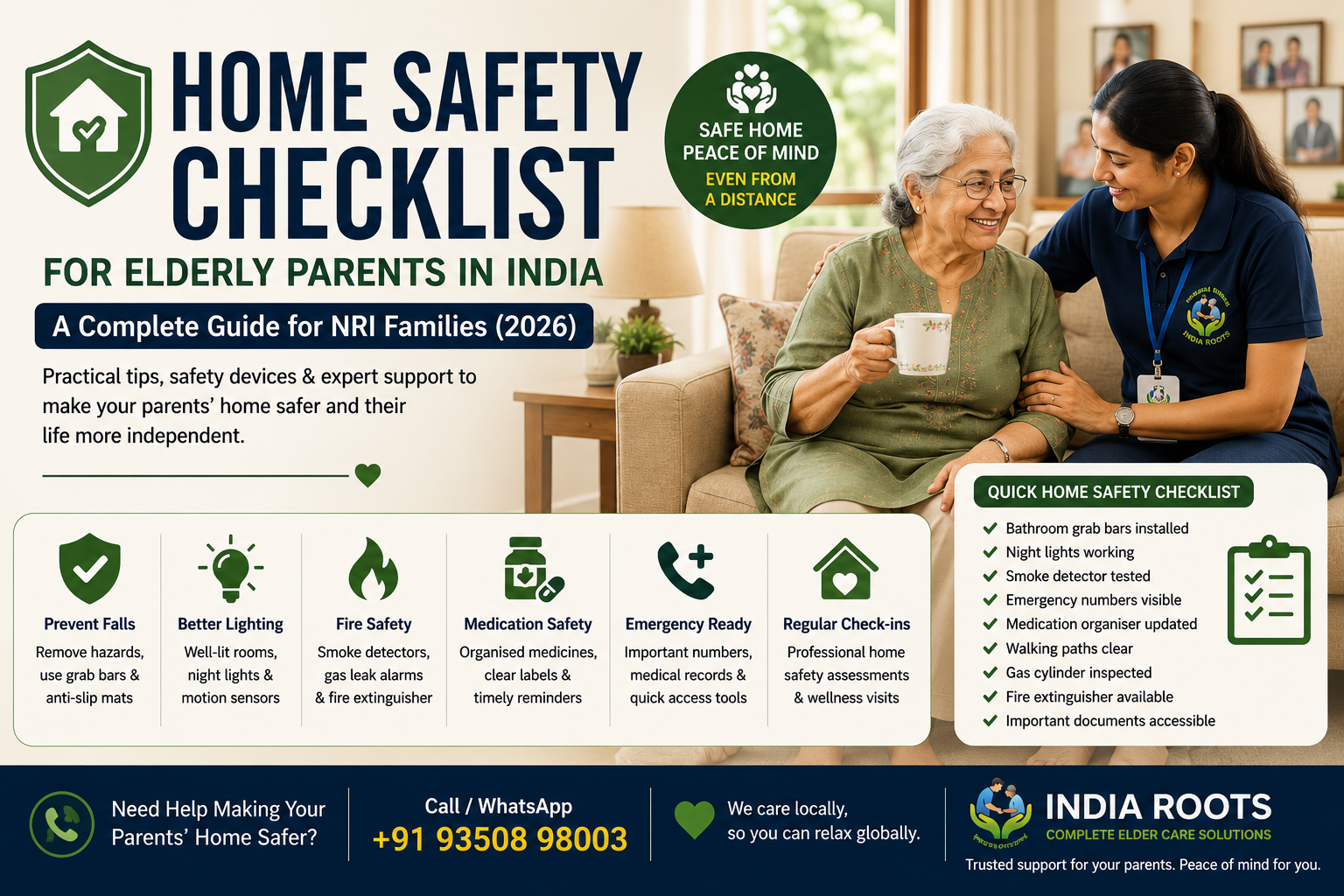
Home Safety Checklist
Use this quick checklist for a fast home safety review:
☐ Bathroom grab bars installed
☐ Night lights working
☐ Smoke detector tested
☐ Emergency numbers visible
☐ Medication organiser updated
☐ Walking paths clear
☐ Electrical wiring checked
☐ Gas cylinder inspected
☐ Fire extinguisher available
☐ Important documents accessible
Frequently Asked Questions
How can I make my elderly parents’ home safer?
Start with a room-by-room review: remove tripping hazards, install grab bars in the bathroom, improve lighting, and make sure emergency contacts and medications are easily accessible.
What causes most falls among seniors?
Falls are commonly caused by slippery floors, poor lighting, loose rugs, cluttered walkways, and reduced balance or mobility due to age.
How often should a home safety assessment be performed?
An assessment once or twice a year is generally recommended, along with a review after any major health change, such as a new diagnosis or reduced mobility.
Should elderly parents install grab bars?
Yes. Grab bars near the toilet and shower significantly reduce fall risk and are one of the most cost-effective home safety improvements.
Are CCTV cameras useful?
Yes — a doorbell or entrance camera helps parents verify visitors safely and gives family members abroad added visibility and reassurance.
What emergency numbers should seniors keep?
Family contacts, a local doctor, the nearest hospital, and an ambulance service should all be written down and kept somewhere visible, such as near the phone or on the fridge.
How can NRIs monitor parents’ safety remotely?
Through regular phone check-ins, smart home devices like cameras and sensors, and by working with a local elder care service that can perform in-person visits and assessments.
Can IndiaRoots inspect my parents’ home?
Yes. IndiaRoots offers professional home safety assessments, identifying hazards and coordinating any necessary repairs or installations.
Conclusion
Most accidents involving elderly parents at home are preventable. Simple, practical changes — a grab bar here, better lighting there, an organised medicine cabinet — can meaningfully reduce the risk of falls, burns, and emergencies. Regular safety reviews don’t just protect your parents; they offer real peace of mind to families managing care from a distance.
IndiaRoots helps families create safer homes for ageing parents through professional home safety assessments, regular wellness visits, and ongoing support — so you can feel confident your parents are safe, even when you’re miles away.
Make Your Parents’ Home Safer Today
Whether your parents live alone or with a spouse, IndiaRoots can help identify hazards, coordinate repairs, and provide regular wellness visits to improve safety and independence.
📞 Call/WhatsApp: +91 93508 98003
📧 Email: info@indiaroots.org
🌐 Book a Free Home Safety Consultation